
Main Principles for Successful Fermentation
Join Fermentista to explore the vibrant world of food fermentation. Our educational platform offers delicious recipes, helpful tips, and a monthly subscription for trying new flavors. Embrace fresh colors and lively ideas as you learn to ferment food right in your own kitchen!
5/8/20242 min read
🌱 Main Principles for Successful Fermentation
1. Create an Oxygen-Free Environment
Fermentation is an anaerobic process, meaning it thrives without oxygen.
✅ Always ensure vegetables are fully submerged in brine to prevent mould and harmful bacteria.
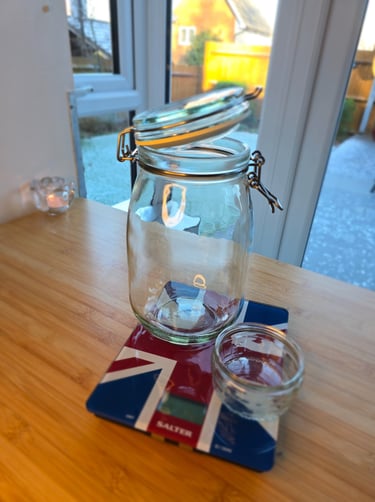
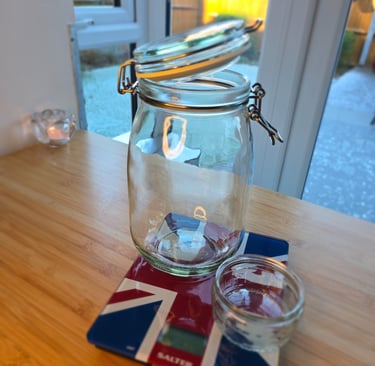
✅ Use a weight to keep everything below the surface — GU dessert pots work well with Kilner jars, or try a brine-filled Ziploc bag.
2. Use the Right Amount of Salt 🧂
Salt is essential for controlling microbial balance and protecting your ferment:
Fermentista’s formula:
🥕 1 kg vegetables + 💧 1 litre water + 🧂 30 g salt (choose sea, rock, or Himalayan salt).❌ Avoid iodised or table salt with anti-caking agents—they can interfere with fermentation.
3. Choose Good Water 💧
Chlorine in tap water can slow fermentation.
Leave water uncovered overnight so chlorine evaporates, or
Boil and cool to room temperature before use.
4. Equipment Checklist 🛠️
🧼 Clean kitchen: Start with a tidy workspace to minimise contamination. Avoid disinfectants or antibacterial agents—they can interfere with fermentation.
🫙 Wide-mouth jar with lid: clip top jars work best; remove the rubber seal during active fermentation.
Weight to keep the product submerged in brine - GU pot works well
🔪 Chopping knives and board: Preferably wooden to avoid microplastics.
⚖️ Kitchen scales: For accurate salt measurement.
5. Give It Time and the Right Temperature ⏳🌡️
Fermentation is a natural, slow process:
Active stage: 3–6 days at 18–24°C (kitchen counter works well). Remove the rubber seal from clip top jars during this stage.
Then replace the seal and move the jar to the fridge for 1–3 months for slow flavour development.
6. Use Fresh Produce 🥬
The fresher the vegetables, the better the result. Supermarket produce works fine, but local or seasonal vegetables often give superior flavour.
7. Experiment with Aromatics 🌿
Fermentation softens and changes flavours—try herbs, spices, or garlic.
Use whole leaves (e.g., bay leaves) to prevent floating and exposure to oxygen.
8. Troubleshooting 🔍
Mould:
Appears as fuzzy or hairy spots, often grey, greenish, or pink.
Starts as small dots or islands on the surface.
If mould appears, discard the batch—it’s unsafe.
Kahm Yeast:
A harmless white, thin, crinkly film covering most of the surface.
Simply remove it and continue fermenting safely.
9. Avoid High-Sugar Produce 🍎
Fruits or very ripe tomatoes can encourage yeast growth, turning your ferment alcoholic. Stick to low-sugar vegetables for best results.
10. Enjoy the Creative Process 🎨
Fermentation is as much an art as it is a science. Once you’ve set everything up, most of the work is done by good bacteria while your jar sits quietly on the kitchen counter.
Be patient and curious—taste as you go. It’s helpful to taste daily to notice how tanginess develops.
Every batch is unique, and experimenting with flavours is part of the fun!